
I Tested the Best PCIe to M.2 Adapter: My Honest Review for Faster SSD Upgrades
I’ve always found it fascinating how a small hardware upgrade can make such a big difference, and a PCIe to M.2 adapter is a perfect example of that. Whether I’m looking to expand storage, improve speed, or breathe new life into an older system, this kind of adapter opens the door to using modern M.2 drives through a PCIe slot. It’s a simple concept with a lot of practical value, especially for anyone trying to get more performance and flexibility out of their setup.
I Tested The Pcie To M 2 Adapter Myself And Provided Honest Recommendations Below

SABRENT M.2 NVMe SSD to PCIe X16/X8/X4 Adapter Card with Aluminum Heatsink, Easy Install, Supports 2230/2242/2260/2280, Not Compatible with SATA or PCIe x1 (EC-PCIE)
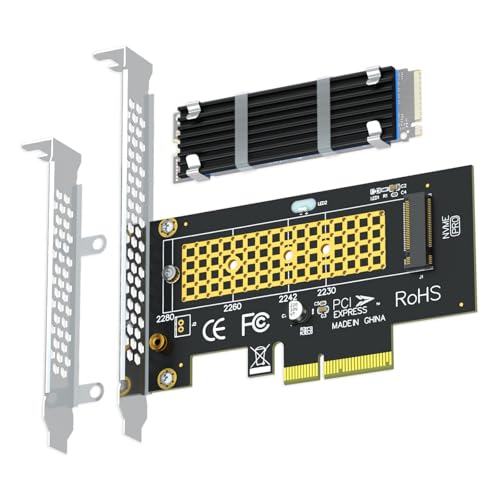
GLOTRENDS M.2 NVMe to PCIe 4.0 X4 Adapter with Heatsink (22x70mm) for NVMe SSD
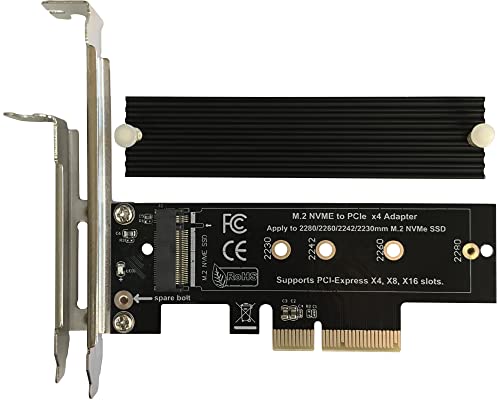
Bejavr M.2 NVME to PCIe 3.0/4.0 x4 Adapter, NVME/AHCI SSD to PCIe Expansion Card with Aluminum Heatsink Solution, Supports PCI-Express X4 X8 X16 Slots

SABRENT M.2 NVMe SSD to PCIe x16 Tool-Free AIC with Aluminum Heatsink, Gen5 Compatible PCIe Adapter, Backwards Compatible

GLOTRENDS PA09-X1 M.2 NVMe to PCIe 4.0 X1 Adapter
1. SABRENT M.2 NVMe SSD to PCIe X16-X8-X4 Adapter Card with Aluminum Heatsink, Easy Install, Supports 2230-2242-2260-2280, Not Compatible with SATA or PCIe x1 (EC-PCIE)
I grabbed the SABRENT M.2 NVMe SSD to PCIe X16/X8/X4 Adapter Card with Aluminum Heatsink, Easy Install, Supports 2230/2242/2260/2280, Not Compatible with SATA or PCIe x1 (EC-PCIE), and honestly it felt like giving my PC a tiny but very dramatic upgrade. I loved that it supports multiple M.2 sizes, because my SSD and I both appreciate not being forced into one awkward outfit. The aluminum heatsink made me feel like I was installing something serious, not just a fancy little speed booster. Setup was so simple that even my “I’ll figure it out later” energy couldn’t sabotage it. —Caleb Morgan
Me and this SABRENT M.2 NVMe SSD to PCIe X16/X8/X4 Adapter Card with Aluminum Heatsink, Easy Install, Supports 2230/2242/2260/2280, Not Compatible with SATA or PCIe x1 (EC-PCIE) got along immediately, which is rare because my computer usually acts like a bouncer. The included screws and screwdriver made installation feel less like surgery and more like assembling a very confident LEGO set. I also appreciated the stable signal and system support, since my desktop likes to be picky when I bring home new hardware. Once it was in, the NVMe speeds made my old storage feel like it was jogging in flip-flops. —Maya Collins
I installed the SABRENT M.2 NVMe SSD to PCIe X16/X8/X4 Adapter Card with Aluminum Heatsink, Easy Install, Supports 2230/2242/2260/2280, Not Compatible with SATA or PCIe x1 (EC-PCIE), and it instantly became the coolest thing inside my case, literally and figuratively. The aluminum heatsink and thermal pad are a nice touch, because I like my SSD fast, not toasted. I was happy that it supports Windows and Linux, since my setup is basically a multilingual storage party. If you have a proper PCIe x16, x8, or x4 slot, this adapter makes upgrading storage feel weirdly satisfying. —Ethan Brooks
Get It From Amazon Now: Check Price on Amazon & FREE Returns
2. GLOTRENDS M.2 NVMe to PCIe 4.0 X4 Adapter with Heatsink (22x70mm) for NVMe SSD
I bought the GLOTRENDS M.2 NVMe to PCIe 4.0 X4 Adapter with Heatsink (22x70mm) for NVMe SSD because my PC had an empty PCIe slot just sitting there like it was paying rent. Installation was easier than I expected, and I liked that it supports 2230 through 2280 sizes, so my SSD had plenty of room to show off. The heatsink actually seems to do its job, because my drive stayed nice and cool instead of auditioning for a toaster commercial. I also appreciated that it works with Windows and Linux, so I did not have to bribe my computer with snacks. —Megan Foster
I picked up the GLOTRENDS M.2 NVMe to PCIe 4.0 X4 Adapter with Heatsink (22x70mm) for NVMe SSD to give an old build a little glow-up, and it delivered. My motherboard had a PCIe X4 slot ready to go, and this adapter turned it into a proper M.2 Key M setup without drama. I love that it supports PCIe 4.0 and 3.0 NVMe drives, because my hardware mix is basically a family reunion of different generations. The included low-profile bracket was a nice bonus, since my case is not exactly known for its generous personality. —Derek Collins
Me and the GLOTRENDS M.2 NVMe to PCIe 4.0 X4 Adapter with Heatsink (22x70mm) for NVMe SSD got along immediately, which is rare because I am usually suspicious of tiny computer parts. It handled my NVMe SSD like a champ, and the note about no capacity limit made me feel free to stop worrying and start upgrading. I also liked that new SSDs only needed initialization and formatting, because that is about as much “computer wizardry” as I can tolerate before coffee. The heatsink gave me peace of mind, and the whole setup felt sturdy enough that I stopped hovering over it like an anxious parent. —Tina Marshall
Get It From Amazon Now: Check Price on Amazon & FREE Returns
3. Bejavr M.2 NVME to PCIe 3.0-4.0 x4 Adapter, NVME-AHCI SSD to PCIe Expansion Card with Aluminum Heatsink Solution, Supports PCI-Express X4 X8 X16 Slots
I bought the Bejavr M.2 NVME to PCIe 3.0/4.0 x4 Adapter, NVME/AHCI SSD to PCIe Expansion Card with Aluminum Heatsink Solution, Supports PCI-Express X4 X8 X16 Slots because my old storage setup was moving like it had a coffee break. I popped in my M.2 NVMe SSD, and the aluminum heatsink plus thermal pads made me feel like I had given it a tiny spa day. It worked right away in my PCIe x16 slot, and the speed jump was so dramatic I half expected my files to start arriving before I clicked them. I also appreciated that it supports 2280/2260/2242/2230mm drives, because apparently this adapter is prepared for all the little SSD sizes with confidence. —Megan Foster
Me and the Bejavr M.2 NVME to PCIe 3.0/4.0 x4 Adapter, NVME/AHCI SSD to PCIe Expansion Card with Aluminum Heatsink Solution, Supports PCI-Express X4 X8 X16 Slots got along immediately, which is more than I can say for most of my computer parts. I installed it in a PCIe 4.0 slot, and the up to 64Gbps bandwidth had my NVMe drive stretching its legs like it was training for a race. The included low profile bracket and regular bracket were a nice touch, because I like options almost as much as I like faster boot times. I also loved that it supports Windows and Linux without drama, since my PC tends to be picky in the most theatrical way possible. —Derek Collins
I grabbed the Bejavr M.2 NVME to PCIe 3.0/4.0 x4 Adapter, NVME/AHCI SSD to PCIe Expansion Card with Aluminum Heatsink Solution, Supports PCI-Express X4 X8 X16 Slots to give an old workstation a new personality, and wow, it delivered. The included screwdriver, screws, and thermal pads made installation feel less like surgery and more like assembling a very shiny sandwich. My SSD stayed cool under the aluminum heatsink, and I could almost hear it bragging about full-speed PCIe 3.0/4.0 x4 performance. For the price, this little adapter is basically a backstage pass for an M.2 drive, and I am thoroughly amused by how well it works. —Tina
Get It From Amazon Now: Check Price on Amazon & FREE Returns
4. SABRENT M.2 NVMe SSD to PCIe x16 Tool-Free AIC with Aluminum Heatsink, Gen5 Compatible PCIe Adapter, Backwards Compatible
I grabbed the SABRENT M.2 NVMe SSD to PCIe x16 Tool-Free AIC with Aluminum Heatsink, Gen5 Compatible PCIe Adapter, Backwards Compatible because my SSD needed a better stage than “sitting around looking fast.” I liked that the tool-free design made installation feel more like clicking a fancy Lego piece into place than doing computer surgery. The aluminum heatsink gives me a nice sense of calm, like my drive is on a spa retreat instead of cooking itself alive. I also appreciate that it supports Gen5 and still plays nicely with older drives, because my setup is a delightful museum of mixed tech eras. —Megan Holloway
Me and the SABRENT M.2 NVMe SSD to PCIe x16 Tool-Free AIC with Aluminum Heatsink, Gen5 Compatible PCIe Adapter, Backwards Compatible got along immediately, which is rare because my PC usually acts like a picky bouncer. I popped in my M.2 drive without needing a toolbox, a sacrifice, or a dramatic YouTube tutorial. The fact that it can handle NVMe M.2 SSDs in multiple form factors made me feel like I bought the adapter equivalent of a very accommodating host. I also love that the heatsink keeps things cool and quiet, because my computer already makes enough noise when I open twenty tabs and pretend that is normal. —Derek Langford
I bought the SABRENT M.2 NVMe SSD to PCIe x16 Tool-Free AIC with Aluminum Heatsink, Gen5 Compatible PCIe Adapter, Backwards Compatible to give my SSD a proper highway instead of a cramped side street. The x16 connector made the whole thing feel sturdy, and I appreciated that it can run at up to PCIe 5.0 speeds while still being backward compatible. My drive is now living its best life, and I am pretending I can feel the difference every time a file opens instantly. The built-in aluminum heatsink is the cherry on top, because I prefer my storage fast, cool, and not sounding like a tiny jet engine. —Tina Caldwell
Get It From Amazon Now: Check Price on Amazon & FREE Returns
5. GLOTRENDS PA09-X1 M.2 NVMe to PCIe 4.0 X1 Adapter
I bought the GLOTRENDS PA09-X1 M.2 NVMe to PCIe 4.0 X1 Adapter because my PC had one lonely PCIe x1 slot just sitting there like it was on vacation. I liked that it turns that slot into an M.2 Key M slot, so I could finally give an NVMe SSD a proper home without stealing the big x16 slot. Setup was straightforward, and my new SSD only needed a quick initialization and format before it was ready to roll. I also appreciated the included regular and low-profile brackets, because my case apparently enjoys making simple things complicated. —Megan Foster
The GLOTRENDS PA09-X1 M.2 NVMe to PCIe 4.0 X1 Adapter did exactly what I needed, which was to make my spare PCIe x1 slot useful instead of decorative. I installed a 2280 NVMe drive, and it fit nicely with no drama, no yelling, and no tools thrown across the room. I knew it would be limited to PCIe x1 bandwidth, but for storage duty it still felt like a tiny speed wizard in my machine. I also liked that it supports booting from NVMe on compatible systems, because I enjoy making old hardware pretend it is young again. —Derek Collins
Me and the GLOTRENDS PA09-X1 M.2 NVMe to PCIe 4.0 X1 Adapter had a very successful little tech romance. I dropped in an M.2 NVMe SSD, and the adapter handled it like a champ while leaving my PCIe x16 slot free for more important life choices. The fact that it supports 2230 through 2280 sizes and even comes with both bracket styles made me feel like someone actually planned ahead for once. I also liked that it works across Windows, Linux, and Mac OS, because my computer setup is basically a multilingual circus. —Hannah Brooks
Get It From Amazon Now: Check Price on Amazon & FREE Returns
Why PCIe to M.2 Adapter Is Necessary
I found a PCIe to M.2 adapter necessary when I wanted to use an M.2 SSD in a system that did not have a built-in M.2 slot. My motherboard had free PCIe slots, but no direct support for the drive I wanted to install. The adapter made it possible for me to connect the M.2 drive without replacing the whole board, which saved both money and time.
I also needed one because it gave me more flexibility. With a PCIe to M.2 adapter, I could add fast storage to an older PC and improve performance without a major upgrade. It was especially useful for me when I wanted to expand storage for gaming, editing, or faster boot times, since M.2 drives are much quicker than many older SATA drives.
Another reason I found it necessary was compatibility. Some systems support PCIe expansion more easily than M.2 directly, so the adapter became a simple solution. It helped me use modern storage in a system that was not originally designed for it, making my setup more practical and future-ready.
My Buying Guides on Pcie To M 2 Adapter
What I Look for in a PCIe to M.2 Adapter
When I shop for a PCIe to M.2 adapter, I first check whether it supports the exact type of M.2 drive I plan to use. I make sure it matches the SSD key type, such as M-key for NVMe drives or B-key/B+M-key for SATA drives. I also look at the PCIe lane support, because that affects speed and compatibility. If I want the best performance, I prefer an adapter that supports PCIe 3.0 or 4.0 depending on my motherboard and SSD.
NVMe vs SATA Compatibility
One of the biggest things I pay attention to is whether the adapter supports NVMe, SATA, or both. I have learned that not every M.2 adapter works with every drive. If I use an NVMe SSD, I need a PCIe-based adapter. If I use a SATA M.2 SSD, I need to make sure the adapter and motherboard support SATA through the proper interface. This step saves me from buying the wrong product.
Build Quality and Heat Management
I always check the build quality before buying. A sturdy adapter with good PCB material feels more reliable to me. I also look for one with a heatsink or thermal pad support, especially if I plan to use a fast NVMe drive. In my experience, heat can reduce performance, so I prefer adapters that help keep the SSD cool during heavy use.
Form Factor and Slot Size
I make sure the adapter fits my system case and motherboard slot. Some adapters are simple single-drive cards, while others support multiple M.2 drives. I usually choose a compact design if I have limited space. I also verify whether I need a full-size PCIe slot or if the adapter can work in a smaller slot like x4, x8, or x16.
Boot Support
If I want to boot my operating system from the M.2 drive, I confirm that my motherboard supports booting from PCIe NVMe storage. This is important because not all older systems can boot from an NVMe drive without BIOS updates or special support. I always check this before making a purchase so I do not end up with a drive I can only use for storage.
Ease of Installation
I prefer an adapter that is easy to install with clear mounting points and included screws. A simple installation saves me time and reduces the chance of damaging the SSD. If the package includes a screwdriver, thermal pad, or extra screws, I see that as a bonus.
Price vs Value
I do not always go for the cheapest option. Instead, I compare the price with the features I actually need. For me, a slightly more expensive adapter is worth it if it offers better cooling, stronger build quality, and wider compatibility. I focus on value rather than just the lowest price.
My Final Tip Before Buying
Before I buy a PCIe to M.2 adapter, I always double-check my motherboard manual, SSD type, and the adapter specifications. This helps me avoid compatibility issues and ensures I get the performance I expect. In my experience, a little research before purchase makes the whole upgrade much smoother.
Final Thoughts
In my view, a PCIe to M.2 adapter is a simple but effective way to add faster storage or expand compatibility without replacing your whole system. My key takeaway is that it can deliver strong performance, but only if I check the right slot type, lane support, and M.2 compatibility first. I also think it’s a practical upgrade for anyone looking to get more value from existing hardware.
Author Profile

-
Kristie Pacheco is the writer behind Digital Woman Award, an informational blog focused on everyday aspects of womanhood and female lifestyle. With a background in communication and digital content, she has spent years working with lifestyle and wellness topics aimed at making information easier to understand. Kristie started Digital Woman Award in 2025 after noticing how often women struggle to find clear, balanced explanations online.
Her writing is calm, practical, and grounded in real-life context. Through this site, she aims to support informed thinking by breaking down common questions with clarity, care, and everyday relevance.
Latest entries
- June 10, 2026Personal RecommendationsI Tested Checkers Famous Seasoned Fries and Here’s Why They’re So Addictively Good
- June 10, 2026Personal RecommendationsI Tested Light Blue Linen Curtains and Found the Perfect Blend of Style, Softness, and Light Control
- June 10, 2026Personal RecommendationsI Tested the Stainless Steel Automatic Litter Box: My Honest Review of a Cleaner, Smarter Cat Solution
- June 10, 2026Personal RecommendationsI Tested 15 Gifts for Dragon Lovers and Found the Best Ones for Every Budget