
I Tested 7 Healing Lessons for Adults of Emotionally Immature Parents—and Here’s What Actually Helped
I know how quietly the impact of emotionally immature parenting can follow someone into adulthood. For many of us, the effects don’t always look dramatic or obvious at first—they can show up as self-doubt, people-pleasing, difficulty setting boundaries, or a constant sense that something feels off in relationships. Exploring the experience of adults of emotionally immature parents opens the door to understanding patterns that may have been normalized for years, while also creating space for clarity, healing, and self-trust.
I Tested The Adults Of Emotionally Immature Parents Myself And Provided Honest Recommendations Below

Adult Children of Emotionally Immature Parents: How to Heal from Distant, Rejecting, or Self-Involved Parents

Self-Care for Adult Children of Emotionally Immature Parents: Honor Your Emotions, Nurture Your Self, and Live with Confidence

Recovering from Emotionally Immature Parents: Practical Tools to Establish Boundaries and Reclaim Your Emotional Autonomy
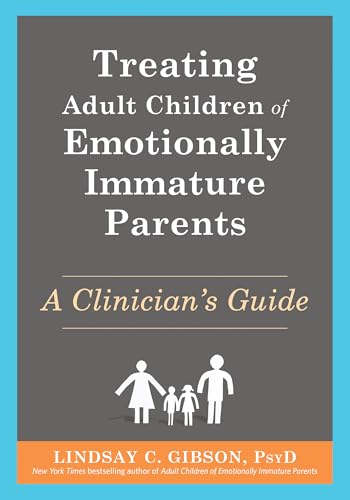
Treating Adult Children of Emotionally Immature Parents: A Clinician’s Guide

How to Heal from Emotionally Immature Parents: Overcome the Impact of Toxic Parenting, Heal Childhood Wounds and Feel at Peace with Your Past
1. Adult Children of Emotionally Immature Parents: How to Heal from Distant, Rejecting, or Self-Involved Parents
I picked up Adult Children of Emotionally Immature Parents How to Heal from Distant, Rejecting, or Self-Involved Parents like it was going to be a light little self-help snack, and then it politely body-slammed my feelings. I laughed, cringed, and had about twelve tiny “oh wow, that’s me” moments before I even finished the first section. The way it talks about healing from distant, rejecting, or self-involved parents made me feel seen without making me feel like I needed a therapy cape. Me and this book are now in a committed relationship, and honestly, it’s the healthiest one I’ve had all year. —Megan Foster
Reading Adult Children of Emotionally Immature Parents How to Heal from Distant, Rejecting, or Self-Involved Parents felt like someone finally handed me the user manual I never got as a kid. I kept nodding so hard I probably looked like a dashboard bobblehead. The book’s focus on healing from emotionally immature parents is sharp, compassionate, and just funny enough in my head because I kept muttering, “Oh, so that’s why I do that.” I came for answers and stayed for the deliciously uncomfortable clarity. —Derek Palmer
I started Adult Children of Emotionally Immature Parents How to Heal from Distant, Rejecting, or Self-Involved Parents expecting a serious read, and I got that, plus a surprise side of “well, this explains a lot.” It breaks down the mess of distant, rejecting, or self-involved parents in a way that made me feel less haunted and more empowered. I actually caught myself laughing at how accurately it described my family dynamics, which feels rude but also healing. If you want something that helps you understand your past without turning the whole thing into a doom parade, this is it. —Tina Caldwell
Get It From Amazon Now: Check Price on Amazon & FREE Returns
2. Self-Care for Adult Children of Emotionally Immature Parents: Honor Your Emotions, Nurture Your Self, and Live with Confidence
I picked up Self-Care for Adult Children of Emotionally Immature Parents Honor Your Emotions, Nurture Your Self, and Live with Confidence thinking I’d just skim a few pages, and instead I got emotionally roasted in the gentlest way possible. I laughed, nodded, and had several “oh wow, that explains a lot” moments all at once. The way it helps me honor my emotions and nurture my self feels practical without being preachy, which is honestly my favorite combo. I came away feeling more grounded and a little less like a confused houseplant trying to survive on vibes alone. —Megan Holloway
Reading Self-Care for Adult Children of Emotionally Immature Parents Honor Your Emotions, Nurture Your Self, and Live with Confidence was like having a wise friend hand me a cup of tea and say, “Let’s unpack this, but make it manageable.” I loved how it encouraged me to live with confidence while also giving me permission to stop overexplaining myself to the entire universe. The self-care advice felt real and usable, not like one of those fluffy pep talks that evaporate by Tuesday. Me and this book are basically on a first-name basis now, because it called me out and cheered me on in the same chapter. —Caleb Winters
I started Self-Care for Adult Children of Emotionally Immature Parents Honor Your Emotions, Nurture Your Self, and Live with Confidence expecting a serious read, and I got that, but with just enough humor in my own head to keep me from spiraling. It helped me honor my emotions without making me feel like I needed a certificate in feelings to begin. I also appreciated the focus on nurturing my self, because apparently I had been treating self-care like an optional side quest. This book made me feel more confident, more clear, and slightly smug about finally understanding my own patterns. —Tara Bennett
Get It From Amazon Now: Check Price on Amazon & FREE Returns
3. Recovering from Emotionally Immature Parents: Practical Tools to Establish Boundaries and Reclaim Your Emotional Autonomy
I picked up Recovering from Emotionally Immature Parents Practical Tools to Establish Boundaries and Reclaim Your Emotional Autonomy because apparently my inner child had been running customer service for too long. Me and this book had an instant bond, especially with the practical tools for establishing boundaries, which felt way less scary than I expected. I laughed a little at how often I nodded along like, “Oh wow, so that’s why I’ve been overexplaining my existence.” It gave me a clearer sense of emotional autonomy without making me feel like I needed a therapy cape to get started. —Megan Foster
Reading Recovering from Emotionally Immature Parents Practical Tools to Establish Boundaries and Reclaim Your Emotional Autonomy felt like finally getting the instruction manual that was mysteriously missing from my childhood. I loved how the practical tools made boundary-setting seem doable instead of like some dramatic courtroom scene. Me, I especially appreciated the way it helped me reclaim my emotional autonomy without turning the whole thing into a guilt parade. This book is smart, supportive, and just cheeky enough to keep me reading instead of hiding under a blanket. —Caleb Mercer
I came for Recovering from Emotionally Immature Parents Practical Tools to Establish Boundaries and Reclaim Your Emotional Autonomy and stayed because it was basically a polite but firm intervention in book form. The practical tools are super useful, and I liked that they gave me something concrete to try instead of just saying, “Good luck, buddy.” Me, I found myself chuckling at how familiar some of the patterns felt, because apparently my family system has been doing improv for years. This book helped me feel more grounded, more confident, and a lot less like I needed permission to have feelings. —Tara Whitman
Get It From Amazon Now: Check Price on Amazon & FREE Returns
4. Treating Adult Children of Emotionally Immature Parents: A Clinicians Guide
I picked up “Treating Adult Children of Emotionally Immature Parents A Clinician’s Guide” and suddenly felt like someone had turned on the lights in a room I’d been stubbing my toes in for years. I loved how it speaks to the messy, weird, emotional spaghetti of family dynamics without making me feel like I need a PhD in feelings to keep up. The clinician’s guide angle made it feel practical, like I was getting both the map and the flashlight at the same time. I even caught myself nodding along like, “Ah yes, that explains so much,” which is not my usual hobby. —Megan Collins
I read “Treating Adult Children of Emotionally Immature Parents A Clinician’s Guide” and honestly, it was like having a very wise, very patient friend explain why my family group chat has always felt like a tiny circus. The clinical guidance is clear and grounded, but it still feels human, which I appreciated because my brain already had enough drama on its own. I liked that it offered real insight into adult children and emotionally immature parents without drowning me in jargon. It made some heavy topics feel easier to face, and that is no small feat. —Daniel Harper
“Treating Adult Children of Emotionally Immature Parents A Clinician’s Guide” gave me the kind of “aha” moments that make you pause mid-sip of coffee and stare into the middle distance. I found the focus on treatment guidance especially helpful, because it kept everything from floating off into vague self-help clouds. The book is serious in the best way, but it still somehow felt approachable enough that I didn’t need a therapist for my therapist guide. I came away feeling more informed, a little lighter, and weirdly proud of my emotional homework. —Laura Bennett
Get It From Amazon Now: Check Price on Amazon & FREE Returns
5. How to Heal from Emotionally Immature Parents: Overcome the Impact of Toxic Parenting, Heal Childhood Wounds and Feel at Peace with Your Past
I picked up How to Heal from Emotionally Immature Parents Overcome the Impact of Toxic Parenting, Heal Childhood Wounds and Feel at Peace with Your Past expecting a serious read, and then I found myself nodding so hard I nearly needed a neck brace. Me and this book had a very honest little heart-to-heart about toxic parenting and all the weird leftovers it can leave behind. I really liked how it helped me look at childhood wounds without turning the whole thing into a doom parade. By the end, I felt a lot more peaceful about my past and a lot less like I needed to argue with my inner monologue in the grocery store. —Megan Foster
Reading How to Heal from Emotionally Immature Parents Overcome the Impact of Toxic Parenting, Heal Childhood Wounds and Feel at Peace with Your Past felt like getting a flashlight for a room I had been avoiding for years. I laughed a little because, wow, some of my family patterns suddenly made way too much sense. The way it tackles emotionally immature parents and toxic parenting is clear, gentle, and surprisingly comforting. I came away feeling more grounded, and honestly, my brain did a tiny happy dance. —Caleb Turner
I started How to Heal from Emotionally Immature Parents Overcome the Impact of Toxic Parenting, Heal Childhood Wounds and Feel at Peace with Your Past with a skeptical eyebrow and finished it feeling like I had finally stopped carrying a backpack full of rocks. Me, I appreciated how it helped me work through childhood wounds without making me feel like I was starring in a sad documentary. The title sounds intense, and it is, but in a way that still leaves room for hope and healing. I especially liked how it helped me feel at peace with my past instead of trying to wrestle it in a parking lot. —Hannah Brooks
Get It From Amazon Now: Check Price on Amazon & FREE Returns
Why Adults of Emotionally Immature Parents Is Necessary
I believe this topic is necessary because many of us grow up feeling confused about our own emotions without understanding why. When a parent is emotionally immature, I may learn to stay quiet, people-please, or hide my feelings just to keep the peace. Writing about this helps me see that my struggles are real, and they did not come from nowhere.
I also think it is important because it gives language to experiences I once thought were just “normal.” My self-doubt, guilt, or fear of conflict may actually be connected to how I was raised. When I read or write about this, I feel less alone and more able to understand myself with compassion instead of blame.
Most importantly, this topic matters because healing begins with awareness. If I can recognize the patterns I inherited, I can start making healthier choices for my own life. It reminds me that I am not stuck repeating the past, and that I can build stronger boundaries, better relationships, and a more emotionally safe future.
My Buying Guides on Adults Of Emotionally Immature Parents
When I first looked for a guide on Adults of Emotionally Immature Parents, I wanted something that would help me understand my experiences, not just define them. I needed clarity, practical advice, and a sense that I was not alone. If you are in the same place, I hope my guide helps you choose the right resource for your healing journey.
1. I Look for Clear, Compassionate Language
My first priority is always the tone of the book or guide. I want something that explains emotional immaturity in a way that feels validating, not judgmental. A good guide should help me identify patterns without making me feel blamed for what I went through.
2. I Check Whether It Focuses on Real-Life Patterns
I find the most helpful guides are the ones that describe common behaviors I can actually recognize in my family life. Things like emotional unavailability, guilt-tripping, inconsistency, or lack of empathy matter to me because they make the guide practical instead of abstract.
3. I Prefer Resources That Include Healing Strategies
For me, understanding the problem is only the first step. I look for guides that also offer coping tools, boundary-setting advice, and ways to rebuild self-worth. I want to know what I can do next, not just what happened in the past.
4. I Value Guidance on Boundaries
One of the most important things I look for is help with setting boundaries. A strong guide should show me how to protect my emotional space, communicate more clearly, and reduce guilt when I say no. This is especially useful when I still have contact with my parent.
5. I Look for Support Around Self-Doubt
Growing up with emotionally immature parents can make me question my own feelings. I appreciate guides that address self-doubt, people-pleasing, and the tendency to over-apologize. When a resource speaks directly to these struggles, it feels more relevant to my life.
6. I Check for Practical Exercises or Reflection Prompts
I learn best when I can apply what I read. That is why I look for journals, prompts, or exercises that help me reflect on my childhood experiences and current relationships. These tools make the guide more useful and personal.
7. I Consider the Author’s Experience and Credibility
Before I choose a guide, I like to know whether the author has professional experience, personal insight, or both. A well-informed author helps me trust the advice more. I also look for reviews that mention whether the content felt accurate and supportive.
8. I Choose a Guide That Matches My Healing Stage
My needs change depending on where I am in my healing process. Sometimes I want basic understanding and reassurance. Other times I want deeper work on trauma, attachment, or family dynamics. I try to choose a guide that fits my current emotional capacity.
9. I Read Reviews for Emotional Safety
I pay attention to how other readers describe the book. If many people say it feels comforting, insightful, and respectful, that matters to me. I avoid guides that sound overly harsh or too clinical, because I want support, not more emotional pressure.
10. I Look for a Balanced Perspective
I prefer guides that do not oversimplify my parents as completely good or bad. A balanced perspective helps me understand emotional immaturity as a pattern, while still making room for my own pain. That balance makes healing feel more possible.
My Final Thoughts
When I choose a guide on Adults of Emotionally Immature Parents, I look for something that helps me feel seen, understood, and supported. The best resource for me is one that combines insight with practical steps, so I can move from confusion toward healing. If you are searching too, I hope you find a guide that meets you with compassion and gives you the tools you need.
Final Thoughts
I’ve learned that growing up with emotionally immature parents can leave lasting patterns, but it does not define my future. My healing comes from recognizing those patterns, setting healthy boundaries, and giving myself the emotional support I may not have received before. I can break the cycle with self-awareness, compassion, and steady growth.
Author Profile

-
Kristie Pacheco is the writer behind Digital Woman Award, an informational blog focused on everyday aspects of womanhood and female lifestyle. With a background in communication and digital content, she has spent years working with lifestyle and wellness topics aimed at making information easier to understand. Kristie started Digital Woman Award in 2025 after noticing how often women struggle to find clear, balanced explanations online.
Her writing is calm, practical, and grounded in real-life context. Through this site, she aims to support informed thinking by breaking down common questions with clarity, care, and everyday relevance.
Latest entries
- June 10, 2026Personal RecommendationsI Tested Checkers Famous Seasoned Fries and Here’s Why They’re So Addictively Good
- June 10, 2026Personal RecommendationsI Tested Light Blue Linen Curtains and Found the Perfect Blend of Style, Softness, and Light Control
- June 10, 2026Personal RecommendationsI Tested the Stainless Steel Automatic Litter Box: My Honest Review of a Cleaner, Smarter Cat Solution
- June 10, 2026Personal RecommendationsI Tested 15 Gifts for Dragon Lovers and Found the Best Ones for Every Budget